显示标签为“Ears”的博文。显示所有博文

2013年9月26日星期四

Dogs" Ears and Retention


A brilliant and faithful friend of mine was musing on the pattern typical to new converts in her ward.  With her permission:


Our ward has brought in a bunch of single females into the baptism font recently and the trajectory has been almost identical for all of them:


Phase One:  Missionaries love me. I feel the pull of the truth and the Lord’s love.  Church members are coming over in droves to listen to me talk for 90 minutes about the inside of my dog’s ear if I want to, waiting to get a niblit of gospel teaching into the conversation. I love the church.


Phase Two:  Excited, everyone showed up at my baptism and I’m willing and eager to learn a new life with new friends and the ward family I was welcomed into.  This is gonna be so great.  The Church is true.


Phase Three:  They are now letting me know that the Jesus I shared my love for doesn’t want me alone and won’t let me hang around unless I’m married and my chances of that are slim to none.  I explained I had a horrible marriage, divorce, abuse situation, etc but they summarily dismiss that and insist on family as the ultimate reason to exist and praise Jesus. Redemption and repentance are important but only as paths to get to family.  Not to live with the Savior, but to live with my family.  I sit in sacrament meetings all about forever families, but I can’t be sealed to my own children.  The “it will come later” explanation seems the same sort of mystery that they said wasn’t good in my old church.  But people are nice and seem devoted, at least to their own family.


Phase 4: This is very differerent than my first month here.  They don’t know I’ve gone back to my old church to visit.  Everyone here is too busy protecting time with their own insulated families.  We had prayer circle on Wed and I loved it.  I felt like a real family of worshipers again.  No one from the new church comes to talk or listen anymore, missionaries stopped coming and the assigned teachers don’t seem to have a genuine interest in anything but the magazine they read from.  They don’t come other than that.  I thought all that was the beginning of new friendships but I guess not.  I don’t know what happened.  We had such a good time talking last month.  I have friends at my (old) church without even trying.  They seem to need friends too so we all have that common support for each other.  They have families too but are more open with their time.


Musings:


Maybe the baptisms serve to help us not have so many to do in the millenium but they don’t seem to be much more than that.  While I don’t want to be the socially favorite church, it sure seems like investigators don’t understand what they are getting into and either don’t have the motivation or don’t have the skills to withstand the isolation we put them through as singles.


While Sis Beck talked about the women flooding into the church as we found our vision of RS, I don’t think she meant they would come for 4 month stints and leave.  It’s so frustrating and heartbreaking.  The ones most attracted are those that need a community and think they’ve found it as the missionaries are so very attentive.  Then they get suddenly ignored.


So solutions?  Still pondering what to do.  Reading through some RS histories to try to get some ideas.  [She here names a few women in her ward who do a good job maintaining relationships with singles.]  Some friends from Utah do it well.  It’s far more rare than it should be.  And mothers/families suffer from the consequenses of being so isolated from others and overly insulated as a family.


When I was new to the church, I was convinced the choirs needed robes.  I’ve since realized that was just my own wish for something familiar in an unfamiliar religionworld.  Is this just a choir robe issue or do we really need to be more of a community?  Will a community distract from our duties and abilities to care for our families?


“No success will compensate for failure in the home.”  If I hear that quote one more time over the pulpit… I may scream.  I don’t think they were talking about saying no to callings or spending time with new members.  I can come up with example after example of pioneer stories that WE promote in our talks and lesson, about people inviting refugees into their home nad having all their kids die of smallpox.  Of wagon company members sharing food with others and suffering terribly.  Missionaries going on 3 yr missions, leaving women and children, sick and pregnant behind.  The list of overdramatic stories we love are rife with sacrificing for others.


And the rumor is that “singles” are selfish or overly self-concerned.  Oh brother!


3 people like this post.

2013年9月25日星期三

Time to Clean Your Pet"s Ears?


Veterinarians see a lot of patients with ear infections. In fact, it’s the second most common reason for a client visit, according to pet health insurer, VPI Pet Insurance. With ear problems prompting so many trips to the vet, should ear cleaning be a necessary part of grooming your pet?


Generally, cleaning a dog’s ears on a routine basis is not necessary, according to Leonard Jonas, DVM, MS, DACVIM, a veterinarian with Wheat Ridge Animal Hospital in Wheat Ridge, Colo. That’s because animals have a naturally occurring self-cleansing process.


“I’ve had pets my whole life,” Jonas said. “I don’t remember ever routinely cleaning out their ears.”


However, that doesn’t mean pet owners should never take notice of their dog’s ears. Certain breeds, lifestyles and physical characteristics will make a dog more prone to what Jonas calls “abnormal situations,” in which the pet’s normal homeostasis is disrupted. This is when something, either systemically or locally in the ear, interferes with the normal surface barrier defense system and the normal cleaning process that keeps bacteria and yeast under control.


There are signs to watch for if your pet is having an issue with its ears. These, according to Jonas, include:


  • Shaking its head


  • Flapping its ears


  • Rubbing at its ears, either with a paw or by rubbing against furniture or carpet


  • Self-massaging the ear to ease itch, pain or irritation


  • Debris and/or redness inside the ear


  • Sores inside the ear


  • Odor in the ear due to abnormal oils and bacteria


“If you [the pet owner] look in the ear, you can see sometimes a lot of debris,” said Jonas, explaining what an ear with an infection or problem may look like. “Then [you] see redness on the ear flaps (inside) or sores developing. And then there’s also odor that occurs when you have an abnormal ear.”


Breeds to watch
There are certain breeds of dogs—such as Shar Peis, bulldogs and poodles—that have narrow ear canals and have a higher chance of incurring ear issues. Poodles, especially, have more hair in the canals, Jonas explained. “The hair itself is not a problem, but if they’ve got something abnormal with their whole defense system, all that extra hair in there makes it difficult.”


Cocker spaniels are notorious for ear problems, Jonas added.


When to clean your pet’s ears
According to Jonas, it’s best to consult your veterinarian before going forward with an ear-cleaning regimen. Unlike cleaning the teeth, cleaning the ears does not need be done regularly. If a pet owner suspects that something may be wrong with the ear, it’s advised to visit the veterinarian and establish whether the dog’s ear needs to be cleaned by the owner either routinely or for an instructed period of time.


Cleaning the dog’s ears without first seeing a veterinarian is not a good idea, Jonas said, “because you don’t know what’s going on inside. You don’t know if there has been a ruptured ear drum; you don’t know if there’s a stick or a stone or something stuck down inside the ear that needs to be fished out by a veterinarian.”


A veterinarian can diagnose the problem and make the proper recommendations, which may be cleaning and/or medication.


Typically, there are two situations for which a dog’s ears would need to be cleaned regularly. The first is when a veterinarian instructs for it to be done, and the second is when the dog is frequently in water. “Water in their ears disrupts the normal defense barrier system in that ear, and can make them prone to getting infections and irritation and inflammation,” Jonas said.


If there needs to be ear cleaning
A veterinarian should show the owner how to properly clean the dog’s ears because “there are a lot of different techniques, and it depends on what the problem is,” Jonas advised.


There are a couple of precautions to always remember, according to Jonas. First, never use a Q-tip, because it tends to push the wax and debris further into the ear. Second, be sure a groomer does not pluck the hair out of the dog’s ears, unless that hair is contributing to an ear problem; Jonas believes that doing so may cause irritation.


One thing pet owners should also consider is that if the dog has an ear infection, it could be very painful for them. Forcing the dog to get its ears cleaned or putting medication in them can be a dangerous situation for the owner and the dog.


“If your pet doesn’t want you to do it, don’t, because it hurts,” Jonas said. “You’re just going to create a problem, and you need to look to alternatives.”


Originally published by Healthy Pet.


Fun Dog Facts For Kids: Dogs" Ears Get Hot When They Swim!


fun dog facts for kids

Fun Dog Facts for Kids: Dogs’ Ears Get Hot When They Swim


Fun Dog Facts for Kids: Dogs’ Ears Get Hot When They Swim!


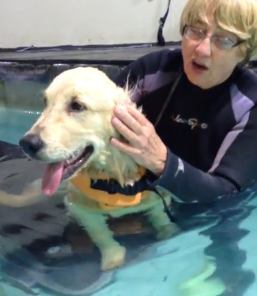
In this video, Julie, who helps dogs learn how to swim and get low-impact exercise, explains that dogs’ ears get really hot when they swim. When they work out too much, they get hot dog ears! Julie checks the inside of their ears after a few minutes of exercise. In this video, she’s working with Michael’s dog, Hudson: Watch the video here:


Julie says that even when dogs are exercising on land, their ears can get hot. It’s good if the dogs’ ears are warm because it means they’re working out. If dogs’ ears get too hot, they can get leg cramps, she says. By feeling the inside of dogs’ ears, you can also feel the dogs cool off. Julie provides a lot of fun dog facts for kids!


To learn more fun dogs facts for kids, follow Michael’s Dog Blog and subscribe to his youtube channel here: www.youtube.com/user/BashAndLucy. And be sure to check out Michael’s illustrated children’s book.  The book stars a sporty Golden Retriever named Lucy who has lots to teach a boys’ soccer team–if only Coach will let her!


2013年9月23日星期一

Guest Strip by Jon Esparza: Ears

Today, my great friend Tyler Page brings us a Christmas-Day Tooth Tale. Sorry you had a sucky Christmas that year, Tyler, but it made for a good comic! And while we’re here, let me send you over to Rachel Nabors’ site, where she explains a necessary, expensive, long, and excruciating UPCOMING dental experience she’s about to go through! Rachel doesn’t have insurance, and is going to have to pay for her expenses out-of-pocket. She’s a prolific, award-winning cartoonist who posts weekly to Gurl.com, and she could use your help. Click the banner to learn more! And, for anybody new to SMILE, hello! Welcome to my true tales of dental misfortune! I’ve been running guest strips for a few weeks now, but the main story begins here !

2013年9月22日星期日

Why Do Dog Ear Infections Make Dogs Ears Hurt?

Many people have questions and concerns about dog ear infections.
In most cases it is quite obvious that ear infection in dogs ears cause them to hurt.
The dogs ears may not hurt at first so if you’re lucky enough to notice the symptoms of infection in the dogs ears right away, you may avoid ear ache pain.
Most of the time people don’t notice the symptoms until the dogs ears are red, sore, tender and aching.
Once the dog has an ear ache and displays other symptoms of ear infection or problems, an effective dog ear treatment will be needed as soon as possible in order to avoid further complications from the infection.
Examining the dogs ears on a regular basis can help avoid ear ache pain as you can apply treatment while the infection is in the early stages. Dog ear infection doesn’t go away without treatment and will only get worse if left untreated.
Some obvious signs of infection in dogs ears:
Oozing substance from the ears, can be clear or may be dark and sticky
Smelly ears, infected ears usually have a foul odor
Scratching at the ears, irritated sore ears may be itchy, often the dog will scratch at them
Dogs may rub the ears against things in an effort to find comfort.
You may hear fluid in the ears or you might hear some kind of crackling sounds in the ears.
There may be some black debris which resembles coffee grounds (usually when dog ear mites are present)
What to do when you notice signs that the dogs ears have infection:
It is important to get a proper dog ear treatment as soon as possible.
Ear infections in dogs can’t be cleaned out, dog ear cleaners or solutions isn’t going to help.
Infection will need antibiotic ear drops, oral antibiotics and sometimes both in order to clear it up.
If your dog has an ear infection, get veterinary ear drops to provide relief from sore and hurting ears.


Control and prevent symptoms of ear infections in dogs, cats or horses. Remedies ear problems in dogs ears once and for all. Find out more about this powerful all natural remedy. Get fast relief for your dogs ears today.


Natural Ways to Clean Your Dog"s Ears

Fortunately, none of my current dogs have had any ear issues and I haven’t had to think about cleaning their ears much. Occasionally, I take a damp washcloth and swipe their ears but I haven’t had to do any hardcore ear cleaning in a long time. I know other dog owners aren’t as lucky! Some breeds are more prone to ear problems than others and other dogs develop ear problems just in the summer months due to increased water play. My recently deceased chocolate lab Scooby loved playing in the water when he was young and at times did develop ear problems. I fortunately had a veterinarian that was willing to show me the proper way to clean my dog’s ears and how to know when to bring him to the vet and when to deal with it myself…..if there were only more vets like that! Obviously, if your dog has an actual infection, you will need to treat it with antibiotics from your veterinarian, but if you are just looking for simple everyday ways to clean your dog’s ears and keep him from developing an infection, here are some tips and resources.


Over at the Daily Puppy, they have a wonderful step-by-step guide on how to clean dog’s ears with vinegar and water. Be sure to follow these instructions carefully!!!! OR visit the ASPCA website to watch a video on cleaning your dog’s ears AND use their warning signs list to help you decide if your dog needs to see a vet. I also recommend talking to your vet about natural ways to clean your dog’s ears, the method you plan to use, and how often you plan to inspect and clean your dog’s ears. All dogs are different, and when it comes to ear cleaning, there is not a one size fits all, so talk to your vet before trying anything at home.


In my personal experience, all my current dogs have floppy ears and no hair that grows in them, so I inspect them regularly and usually only need to swipe with a washcloth. My in-laws however have a small dog that has to have her ear hair trimmed regularly, and they have to watch her ears more closely for possible ear infections. I have learned to NEVER use cotton swabs or go down into the dog’s ear with anything! You should only ever clean the outer part of the ear and if you think there is something inside the ear, see a veterinarian. Personally, I would just be honest with your vet that you want to use natural ways to clean your dog’s ears, and if they won’t help you determine the best natural ways to clean your dog’s ears, find a new trustworthy vet that will!


2013年9月21日星期六

Symptoms and Root Causes - Itching, Ears, and Skin

If I had to pin down the most commonly seen problems in our practice, I’d choose itching/ear infections for the “Top 5″ list. We could spend an eternity talking about these problems, but I’d like to try to offer a brief introduction to the deeper reasons for these things to happen. We’ll have to start by defining the things that we can see on a physical exam (the stuff you notice at home); and then the underlying reason they’re happening.


Ears
Symptoms: shaking of the head, scratching ears, foul smell, goopy waxy discharge (brown or yellow or pus) in the ears, swelling/redness of the ear, major swelling of the ear flap.
800px Ear infection in cocker spaniel


What’s happening: ear infection, called otitis externa. It’s generally caused by inflammation of the skin in the ear canal, which makes the skin susceptible to an infection by bacteria and yeast.


Feet
Symptoms : licking and/or chewing at the feet, red-brown staining of the fur on the feet, redness/swelling of the skin between the toes, swelling of the feet.


What’s happening: skin infection, called dermatitis, usually caused by bacteria and yeast infections. The skin is itchy, which is why dogs chew/lick.
Picture 240


Skin
Symptoms: hair loss, itching, flaky skin, red skin, rashes on the belly/armpits/groin, bad smell, oily/dull/dry coat, peeling skin, crusty skin, or wet/sticky ulcers on the skin surface.


What’s happening: skin infection, usually by bacteria and sometimes yeast, because of inflamed skin surface.
Malassezia dermatitis


In summary, dogs will have nasty ears, nasty skin, and ITCHING. It’s usually these things that drive an owner to call and make an appointment. It may be bad enough for an owner to lose sleep thanks to the licking or scratching going on all night long. (Dogs and cats both may also have gastrointestinal signs like vomiting and diarrhea from certain type of allergies.)


I’ll come right to the point. These signs and symptoms are NOT the underlying disease! We can treat the ears, feet, and skin with all sorts of different things. Ultimately, though, we’re just applying a bandaid that never really addresses the reason the dog is suffering these problems. We can provide temporary relief, up to a point.


The most common underlying cause of these chronic problems is an allergy. It’s not very common for dogs to have an anaphylactic response to something they’re allergic to. People who are allergic to shellfish, for example, will have swelling of the throat and go into shock if they eat shellfish. Thankfully, dogs don’t usually have such a violent response to an allergen. Pets can be allergic to things in the environment, or ingredients in their food.


With environmental allergies, we should think of the things that cause “hay fever” in people: pollen from trees/grass/weeds, dust, dust mites, molds. Dogs don’t get itchy/red eyes and runny noses as often as people do. They have all of those inflammatory reactions in their skin surface, which includes the ears and feet.


The other type of allergy that can cause trouble is a reaction to an ingredient in a dog’s food. The brand doesn’t matter, but the ingredients do! Corn, wheat, beef, poultry, and pork are very common ingredients in various types of dog food. Even a dog that has been eating the same food for several years can develop an allergy to the ingredients in the food. The brand doesn’t matter — the contents do.


Treating the allergy itself requires some testing to know exactly which allergy we’re dealing with. Some unlucky pets have both types of allergy (food and environmental). Thankfully, if we identify at least one of the allergy types, we can usually manage these pets successfully.


Testing for food allergy requires a special diet trial that lasts 8-12 weeks. Testing for environmental allergies requires either blood test or a skin test. THe skin test is much like the skin test that people get. Small injections are given in the skin, and the size of the red swollen area is measured to judge the response to the particular allergen that has been injected.


Treatment of an allergy consists of two major parts. First, we have to deal with the secondary effects of the allergy. This means treating the ear and/or skin infection aggressively. We may also need to control itching. Secondly, we need to treat the allergy itself. If we know what a pet is allergic to, we can treat that allergy directly. That’s the keystone!


Next week, I’ll start breaking down each type of allergy for a more in-depth look. In the meantime, how many of you have pets with chronic skin or ear problems?


It"s All in the Ears


In the wide spectrum of complementary and alternative healing practices, there are many different ways you can support your dog’s health and vitality. But did you know that better health could be as simple as an ear massage?


Dog with Big Ears

The area in and around a dog’s ear contains at least 200 acupressure points, which correspond to every organ and system body.


It’s one of the most fascinating things that I’ve learned in studying Traditional Chinese Medicine for animals – the fact that the ears are a mini-map of all of the acupuncture points in the entire body.  Which means that by massaging the ears, you can actually stimulate and invigorate all of the organs in the body.


While acupuncture on the ear has been used in Traditional Chinese Medicine since 500 BC, an entire system of acupuncture built around the points in the ear was developed much more recently. In the 1950’s, Dr. Paul Nogier of France discovered that the ear represents the entire anatomical body – but upside down. He used this revelation to identify specific points to address a variety of health conditions and his new system of treating the whole body via the ear became Auriculotherapy, and influenced acupuncture practitioners all over the world.


CLICK TO SEE A MAP OF A DOG’S EAR


We now know that there are at least 200 specific points in and around a dog’s ear, which can help to improve the function of every organ and process within the body including digestion, circulation and respiration. But the great part is that you don’t need to be an expert in all of these points – all you need to do is to take the time to give your pooch a nice ear massage on a regular basis and to watch for the positive results.


While a general, all-over massage of the ear and ear flap will help to relax your dog and improve their vitality, there are two of specific areas worth noting.


Triple Heater Meridian: In Traditional Chinese Medicine, the Triple Heater Meridian is a very special channel of energy flow in the body. While most of the other meridians are related to specific organs, the Triple Heater helps to regulate temperature and metabolic function within the body – essentially helping everything to function more efficiently.  In a dog’s ear, the Triple Heater Meridian encircles the ear flap.


Shock Point: The tip of the ear is an important acupressure point to be aware of as this is a point you can use to prevent your dog from going into shock. By alternatively pressing on the tip of each ear, you can assist your dog after a trauma or accident, to help relax their system and counter the effects of severe stress. This point can also be helpful following surgery to speed healing.


So, the next time you are cuddling up with your best friend, try introducing them to a full ear massage. If your dog is already a fan of having you rub his ears, it won’t take much to coax them into enjoying regular ear work sessions. But if they ear sensitive about their ears or are not used to you touching them there, be sure to start slowly and generally increase the amount of time and pressure that you use while massaging that area. In either case, devoting regular time to massaging your dogs ears is a great way to strengthen your bond and help them to feel better – from head to tail.


Animal Cruelty Charges Filed Against Owner of Dog With Cut Ears


Animal Cruelty Charges Filed Against Owner of Dog With Cut Ears


Posted on: 8:00 pm, June 26, 2013, by , updated on: 11:11pm, June 26, 2013


FLORENCE, Ala. (WHNT) – A puppy was dropped off at the Florence-Lauderdale Animal Shelter two weeks ago, with its ears cut by scissors.


Since then, animal shelter volunteers tell WHNT News 19 that dog has made an amazing recovery.


Now the animal’s former owner, faces charges for the crime.


So far, prosecutors have filed misdemeanor animal cruelty charges, but as the investigation continues, more charges may still be handed down.


Shelter leaders say, the dog’s former owner refuses to reveal who actually performed the cutting with scissors.


According to prosecutors, with the severity of the case, the district attorney’s office is working to get the misdemeanor charges upgraded to felonies.


“This sets a precedent for people who are not going to be able to do these kind of things to a dog,” said shelter volunteer, Debbie Rappuhn.


Finally healed, the puppy named Soleil, is going to a dog rescue in New York City, where she will be adopted to a new family.


It’s been a rough start for the four month old puppy, but shelter leaders say, Soleil will no doubt have a great life.


“She`s going to go from being a poor, mutilated, abused puppy, to a little la-di-dog, and I`m so happy for her,” said Soleil’s foster, Debby Nelson.


“This dog is going to have the life every dog wishes for and it came to us from being totally mistreated,” added Rappuhn.


Soleil is a shelter success story, and even though the dog is heading north to find a forever home, shelter volunteers say this puppy has made a mark on many people here in Alabama.


Filed in:

News, Shoals


2013年9月19日星期四

Where to Get Your Dog"s Ears Cropped At

I have conducted a list of veterinarians that have been considered good veterinarians for ear cropping as well as just all around good veterinarians. There are also many questions to ask a veterinarian before taking your dog to one, especially if you’re considering having your dog’s ears cropped.


Questions that you should ask a veterinarian about ear cropping:


Have you ever cropped a dog’s ears? – if they’ve never cropped ears before, stay away!
Are you experienced with ear cropping? – if not, stay away!
Can I see your portfolio of ear crops? – if they can’t provide a portfolio or if the dog’s ears in the portfolio are bad, stay far away!
Have you ever failed an ear crop? If so, how and why? – if they have, don’t use them
What breeds are you experienced with cropping? – some veterinarians are more experienced with cropping ears of specific breeds of dog’s only
Have you ever cropped my breed of dog’s ears before? If so, can I see a portfolio of previous ear crops of this breed? – if they haven’t, it’s best that you find a veterinarian who has done so multiple times
What will happen after the surgery? – they should assign you on how to care for the ears
What if the ears don’t turn out right? – you don’t have to pay because they messed up your dog’s ears, it’s their fault, not yours
Why should I use you as a veterinarian to crop my dog’s ears? – asking questions like this will reveal a lot about the veterinarian. The veterinarian should have an experienced and well thought out and good answer and if they don’t, don’t use them


Questions to ask a veterinarian in general:


Can you show me your facility?
How long have you been a veterinarian?
How long have you been in business?
Are there any hidden fees?
Do you have any questions for me?
Do you charge for any questions asked? If so, why?
Are you always available by phone?
Do you have any testimonials? If so, can you provide those to me?
How many total animals have you performed on?
What do you like about your job?
How will you benefit both me and my dog?
What’s a day’s of work like for you?
Why should I use (enter name of vet’s office here) and how is (enter name of vet’s office here) different from any other veterinarian?


Alabama:


Compton’s Vet Clinic (Cullman, Alabama)
(256) 734-9488

Nall Daniels Animal Hospital (Birmingham, Alabama)
(205) 879-3409


Riverview Animal Clinic (Birmingham, Alabama)
(205) 991-9580


Martin Animal Hospital (Birmingham, Alabama)
(205) 595-8451


Montevallo Clinic (Montevallo, Alabama)
(205) 665-4625


Nall Daniel Animal Hospital (Homewood, Alabama)
(205) 879-3409


Mountain Top Vet (Pisgah, Alabama)
(256) 451-1204


Arizona:

Saguaro Vet Clinic (Scottsdale, Arizona)
(480) 948-1770

Aztec Animal Hospital (Scottsdale, Arizona)
(480) 945-6800


Cochise Animal Hospital (Scottsdale, Arizona)
(480) 991-2858


Glendale Animal Hospital (Glendale, Arizona)
(623) 934-7243


Squaw Peak Animal Hospital (Phoenix, Arizona)
(602) 553-8855


Hermosa Veterinary Clinic (Lake Havasu City, Arizona)
(928) 505-2131


Canyon Pet Hospital (Flagstaff, Arizona)
(928) 774-5197


Buena Pet Clinic (Tucson, Arizona)
(520) 323-9487


VCA Thumb Butte Animal Hospital (Prescott, Arizona)
(928) 445-2331


Arkansas:

Town and Country Veterinary Hospital (Russellville, Arkansas)
(479) 968-6700

New Hope Animal Hospital (Rogers, Arkansas)
(479) 631-0880


California:

Riverside Animal Hospital (Riverside, California)
(951) 683-4200

West Riverside Veterinarian Hospital (Riverside, California)
(951) 686-2242


Tully and La Bounty Vet Clinic (Studio City, California)
(818) 762 1491


St. Louis Vet Clinic (Milpitas, California)
(408) 956-8061


Animal Medical Clinic (Milpitas, California)
(408) 262-7190


Warner City Pet Clinic (Woodland Hills, California)
(818) 710-8528


Elm Veterinary Hospital (Fresno, California)
(559) 233-0313


Cupertino Animal Hospital (Cupertino, California)
(408) 252-6380


Sacramento Animal Hospital (Sacramento, California)
(916) 451-7213


San Fernando Pet Hospital (San Fernando, California)
(818) 361-8636


Country Veterinarian Clinic (Live Oak, California)
(530) 674-1660


Animal and Bird Hospital of Rosedale (Bakersfield, California)
(661) 589-1234


Irvine Pet Complex (Irvine, California)
(949) 833 9020


Aborn Pet Hospital (Fremont, California)
(510) 656-0223


Redwood Veterinarian Clinic (Santa Rosa, California)
(707) 542-4012


Antelope Valley Vet Hospital (Palmdale, California)
(661) 273-1234


Colorado:

Briargate Veterinary Clinic (Colorado Springs, Colorado)
(719) 528-5557

North Academy Veterinary Hospital (Colorado Springs, Colorado)
(719) 599-4443


Hermosa Veterinarian Clinic (Denver, Colorado)
(303) 455-2131


Broadview Animal Clinic (Denver, Colorado)
(303) 755-1424


Columbine Animal Hospital (Littleton, Colorado)
(303) 979-4040


Parkside Animal Health Center (Aurora, Colorado)
(303) 699-3344


Francis Veterinary Hospital (Golden, Colorado)
(303) 279-5952


Connecticut:

Ridge Hill Animal Hospital (North Haven, Connecticut)
(203) 288-3307

Manchester Animal Clinic (Manchester, Connecticut)
(860) 646-5170


Florida:

Sumter County Veterinarian Hospital (Wildwood, Florida)
(352) 748-5454

Riverside Animal Hospital (Coral Springs, Florida)
(954) 575-7915


South Orlando Animal Hospital (Orlando, Florida)
(407) 855-1297


Companion Animal Hospital (Fort Walton Beach, Florida)
(850) 243-7144


Destin Animal Clinic (Destin, Florida)
(850) 837-2931


Navarre Animal Hospital (Navarre, Florida)
(850) 939-1373


Niceville Animal Clinic (Niceville, Florida)
(850) 678-1378


Hollywood Animal Hospital (Hollywood, Florida)
Broward: (954) 920-3556
Dade: (305) 944-5974


Mid County Vet Hospital (Royal Palm Beach, Florida)
(561) 798-8000


Carballo Animal Clinic (Miami, Florida)
(305) 552-9121


Atlantic Animal Hospital (Cape Canaveral, Florida)
(321) 784-4248


Georgia:

River Cliff Animal Hospital (Lilburn, Georgia)
(770) 921-6766

Stockbridge Animal Hospital (Stockbridge, Georgia)
(770) 474-7242
Animal Medical Center of Lawrenceville (Lawrenceville, Georgia)
(770) 963-7363


Hannah’s Mill Animal Hospital (Thomaston, Georgia)
(706) 647-4164


Stockbridge Animal Hospital (Stockbridge, Georgia)
(770) 474-7242


Bullard Animal Hospital (Austell, Georgia)
(770) 941-3668


Stone Mountain Veterinary (Stone Mountain, Georgia)
(770) 469-6111


Quailwood Animal Hospital (Tifton, Georgia)
(229) 386-8794


Hawaii:

Kokua Pet Clinic (Honolulu, Hawaii)
(808) 843-8382

Kalihi Pet Clinic (Honolulu, Hawaii)
(808) 951-8808


Kihei Vet Clinic (Kihei, Hawaii)
(808) 879-5777


Idaho:

Owyhee Veterinary (Homedale, Idaho)
(208) 337-4677

Bench Animal Hospital (Boise, Idaho)
(208) 345-6771


Idaho Veterinarian Hospital (Nampa, Idaho)
466-4614


North Idaho Animal Hospital (Sandpoint, Idaho)
(208) 265-5700


Illinois:

Fox Lake Animal Hospital (Fox Lake, Illinois)
(847) 587-0505

Gold Coast Animal Hospital (Chicago, Illinois)
(312) 337-7387


Avondale Animal Hospital (Chicago, Illinois)
(773) 631-7660


Logan Square Animal Hospital (Chicago, Illinois)
(773) 384-1138


Delta Animal Hospital (Chicago, Illinois)
(773) 278-6019


MontClare Animal Hospital (Chicago, Illinois)
(773) 237-0716


Archer Veterinarian Clinic (Lemont, Illinois)
(630) 257-5121


Midwest Animal Hospital (Orlando Park, Illinois)
(708) 478-7788


North Shore Vet Clinic (Skokie, Illinois)
(847) 966-3080


Indiana:

Bean Blossom Animal Clinic (Nashville, Indiana)
(812) 988-7922

Zionsville Animal Clinic (Zionsville, Indiana)
(317) 873-1833


Airport Veterinarian Clinic (Terre Haute, Indiana)
(812) 877-3087


Noah’s Ark Animal Hospital (Kokomo, Indiana)
(765) 868-8140


Iowa:

Strohbehn Veterinarian Clinic (Council Bluffs, Iowa)
(712) 366-0556

Kindness Pet Clinic (Indianola, Iowa)
(515) 961-2501


Kansas:

Bogue Animal Hospital (Wichita, Kansas)
(316) 722-1085

Chisholm Trail Animal Hospital (Park City, Kansas)
(316) 744-0501


El Paso Animal Clinic (Derby, Kansas)
(316) 788-1561


Kentucky:

Shively Animal Clinic and Hospital (Louisville, Kentucky)
(502) 778-8317

East Kentucky Animal Clinic (Pikeville, Kentucky)
(606) 437-4014


Animal Hospital of Millersburg (Millersburg, Kentucky)
(859) 484-2139


Logan County Animal Clinic (Russellville, Kentucky)
(270) 726-3511


Bath Veterinarian Clinic (Owingsville, Kentucky)
(606) 674-6692


Town and Country Animal Clinic (Maysville, Kentucky)
(606) 759-5496


Louisiana:

Farr Veterinarian Clinic (Lake Charles, Louisiana)
(337) 474-1526

Country Veterinarian Clinic (St. Martinville, Louisiana)
(337) 394-6296


Maine:

Southern Maine Veterinary Hospital (Lyman, Maine)
(207) 499-7244

Countryside Animal Hospital (Rumford, Maine)
(207) 369-9969


Country Club Veterinarian Clinic (Sanford, Maine)
(207) 324-4683


Maryland:

New Market Animal Hospital (New Market, Maryland)
(301) 865-3232

Langley Animal Hospital (Hyattsville, Maryland)
(301) 434-1500


Erdman Animal Hospital
(410) 563-5425


Massachusetts:

VCA Northborough Animal Hospital (Northborough, Massachusetts)
(508) 393-8339

Woodland Animal Clinic (Freetown, Massachusetts)
(508) 763-8029


Central Ave Veterinary Hospital (Seekonk, Massachusetts)
(508) 761-8525


Michigan:

Snider Veterinarian (Clinton Township, Michigan)
(586) 286-5684

Dix Animal Hospital (Lincoln Park, Michigan)
(313) 383-7387


Westwood Veterinarian Hospital (Flint, Michigan)
(810) 785-2211


Michigan Avenue Animal Hospital (Ypsilanti, Michigan)
(734) 482-8171


Minnesota:

Kimball Veterinarian Clinic (Kimball, Minnesota)
(320) 398-3600

Cambridge Veterinarian Clinic (Cambridge, Minnesota)
(763) 689-0095


Douglas County Animal Hospital (Alexandria, Minnesota)
(320) 762-1575


Pomerroy’s Animal Hospital (St. Paul)
(651) 224-4815


Mississippi:

Singing River Animal Hospital (Lucedale, Mississippi)
(601) 947-4066


Missouri:

Florissant Animal Hospital (Florissant, Missouri)
(314) 227-9478

Howdershell Animal Clinic (Florissant, Missouri)
(314) 838-3575


Galloway Village Veterinarian (Springfield, Missouri)
(417) 866-6681


Aid Animal Hospital (Kansas City, Missouri)
(816) 363-4922


Nebraska:

Goodrich Veterinarian Clinic (Omaha, Nebraska)
(402) 896-4511


Nevada:


Flamingo Pet Clinic (Las Vegas, Nevada)
(702) 734-9761

Tropicana Animal Hospital (Las Vegas, Nevada)
(702) 736-4944


Sierra Veterinary Hospital (Carson City, Nevada)
(775) 883-0261


Klaich Animal Hospital (Reno, Nevada)
(775) 826-1212


New Hampshire:

Cilley Veterinarian Clinic (Concord, New Hampshire)
(603) 224-9549

Russell Animal Hospital (Concord, New Hampshire)
(603) 224-2361


Glen Lake Animal Hospital (Goffstown, New Hampshire)
(603) 497-4113


New Jersey:

Millstone Animal Hospital (Clarksburg, New Jersey)
(609) 259-1955

Church Road Animal Hospital (Cherry Hill, New Jersey)
(856) 368-2252


Livingston Animal Hospital (Livingston, New Jersey)
(973) 992-8888


New Mexico:

Schumacher Veterinarian Clinic (Las Cruces, New Mexico)
(575) 524-2894


New York:

Amsterdam Animal Hospital (Amsterdam, New York)
(518) 842-0540

Westbury Animal Hospital (Westbury, New York)
(516) 333-1123


Central Veterinarian Hospital (Scarsdale, New York)
(914) 723-1250


North Carolina:

Cabarrus Animal Hospital (Kannapolis, North Carolina)
(704) 786-6102

Animal Hospital of Kannapolis (Kannapolis, North Carolina)
(704) 938-4606


Ears by Dr. Bill (Asheville, North Carolina)
(828) 277-6823


Fisher Animal Clinic (Raleigh, North Carolina)
(919) 790-0412


Reidsville Animal Clinic (Reidsville, North Carolina)
(336) 349-3194


North Wake Animal Hospital (Wake Forest, North Carolina)
(919) 556-1121


Animal Hospital of Fayetteville (Fayetteville, North Carolina)
(910) 323-1535


North Dakota:

Casselton Animal Hospital (Casselton, North Dakota)
(701) 347-5496
Pinlevton Animal Hospital (Minot, North Dakota)
(701) 852-3055


Ohio:

Snow Ridge Veterinarian Hospital (Cleveland, Ohio)
(440) 845-7744

Lancaster Animal Clinic (Lancaster, Ohio)
(740) 687-1591


Northwest Animal Hospital (Columbus, Ohio)
(614) 451-4772


Love ‘N Care Animal Hospital (Cleveland, Ohio)
(216) 531-5225


Dayton South Veterinarian Clinic (Dayton, Ohio)
(937) 294-8888


Lookout Animal Hospital (Cincinnati, Ohio)
(513) 871-8866


Animal Clinic Northview (North Ridgeville, Ohio)
(440) 327-8282


Bigger Road Animal Clinic (Kettering, Ohio)
(937) 435-3262


Oklahoma:

Cimarron Veterinarian Hospital (Stillwater, Oklahoma)
(405) 372-3200

Hammond Veterinary Hospital (Marlow, Oklahoma)
(580) 658-7300


OKC Veterinarian (Oklahoma City, Oklahoma)
(405) 789-3644


North Penn Veterinarian Hospital (Oklahoma City, Oklahoma)
(405) 752-0131


Gore West Animal Hospital (Lawton, Oklahoma)
(580) 536-2233


Oregon:

Crossroads Veterinarian (Sherwood, Oregon)
(503) 625-4404

West Eugene Animal Hospital (Eugene, Oregon)
(541) 342-5858


All Creatures Animal Hospital (Eaglepoint, Oregon)
(541) 830-5613


Pennsylvania:

Caring Hands Veterinarian Clinic (Philadelphia, Pennsylvania)
(215) 621-8959

Green Valley Animal Hospital (New Brighton, Pennsylvania)
(724) 452-6151


Coventry Animal Hospital (Pottstown, Pennsylvania)
(610) 323-9454


Rhode Island:

Ferguson Animal Hospital (North Providence, Rhode Island)
(401) 349-4280

Newport Animal Hospital (Middletown, Rhode Island)
(401) 849-3400


Wolf Rock Animal Health Center (Exeter, Rhode Island)
(401) 294-0102


East Greenwich Animal Hospital (East Greenwich, Rhode Island)
(401) 885-2221


Riverside Animal Hospital (Riverside, Rhode Island)
(401) 433-2070


South Dakota:

Mountain View Animal Hospital (Rapid City, South Dakota)
(605) 343-8050

Animal Clinic of Rapid City (Rapid City, South Dakota)
(605) 415-4990


Tennessee:

Callahan Drive Animal Hospital (Knoxville, Tennessee)
(865) 938-0243

Fountain City Animal Hospital (Knoxville, Tennessee)
(865) 688-0776


Central Veterinarian Hospital (Knoxville, Tennessee)
(865) 525-1167


Broadway Veterinarian Clinic (Knoxville, Tennessee)
(865) 687-2651


Oak Ridge Veterinary Hospital (Oak Ridge, Tennessee)
(865) 483-6614


Animal Hospital Raleigh-Bartlett (Memphis, Tennessee)
(901) 388-9550


Countryside Veterinarian (Mt. Juliet, Tennessee)
(615) 758-6406


Caudle Veterinarian Clinic (Nashville, Tennessee)
(615) 227-6230


Grassmere Animal Hospital (Nashville, Tennessee)
(615) 832-6535


Southside Animal Hospital (Nashville, Tennessee)
(615) 333-3655


Clarksville Animal Hospital (Clarksville, Tennessee)
(931) 647-1696


Highland Rim Animal Clinic (Fayetteville, Tennessee)
(931) 433-2078


The Animal Clinic of Athens (Athens, Tennessee)
(423) 745-7436


Texas:

Bellfort Animal Hospital (Houston, Texas)
(713) 643-2626

Brittmoore Animal Hospital (Houston, Texas)
(713) 468-8253


Gulfgate Animal Hospital (Houston, Texas)
(713) 643-5723


East Lake Veterinarian Clinic (Dallas, Texas)
(214) 342-3100


Northwood Animal Hospital (San Antonio, Texas)
(210) 828-1406


Mandeville Animal Hospital (Cypress, Texas)
(281) 758-0583


Grand Park Animal Clinic (Katy, Texas)
(281) 392-3127


Sunbury Veterinarian Clinic (Austin, Texas)
(512) 255-8387


Eastwood Animal Clinic (El Paso, Texas)
(915) 593-0713


Animal Clinic of Grand Prairie (Grand Prairie, Texas)
(972) 262-2684


O’Connor Road Animal Hospital (San Antonio, Texas)
(210) 775-1722


Animal Health Care Clinic (Arlington, Texas)
(817) 467-6688


Utah:

West Mountain Veterinarian Hospital (Payson, Utah)
(801) 465-4648

Brickyard Animal Hospital (Salt Lake City, Utah)
(801) 486-0123


Sandy Animal Clinic (Sandy, Utah)
(801) 566-2410


Washington Family Veterinarian Clinic (George, Utah)
(435) 627-1300


Animal Crackers Veterinarian Hospital (West Jordan, Utah)
(801) 561-9271


Pet Medical Center (Orem, Utah)
(801) 225-5395


Vermont:

Arlington Animal Hospital (Arlington, Vermont)
(802) 375-9491

Springfield Animal Hospital (Springfield, Vermont)
(802) 885-2505


VCA Windham Animal Hospital (Brattleboro, Vermont)
(802) 254-9412


Windsor Animal Hospital (Windsor, Vermont)
(802) 674-2070


Green Mountain Animal Hospital (Burlington, Vermont)
(802) 658-3739


Waterbury Veterinarian Hospital (Waterbury Center, Vermont)
(802) 244-5452


Virginia:

Occoquan Animal Hospital (Woodbridge, Virginia)
(703) 491-1400

Smithfield Animal Hospital (Smithfield, Virginia)
(757) 357-9308


Peaks View Animal Hospital (Lynchburg, Virginia)
(804) 385-1300


Mechanicsville Animal Hospital (Mechanicsville, Virginia)
(804) 559-9800


Washington:

VCA Parkway Animal Hospital (Tacoma, Washington)
(253) 531-0454

VCA North Division Animal Medical Center (Spokane, Washington)
(509) 467-5230


Audubon Veterinarian Clinic (Spokane, Washington)
(509) 328-7120


Summitview Cowiche Veterinarian Clinic (Yakima, Washington)
(509) 966-4162


College Way Animal Hospital (Mt Vernon, Washington)
(360) 848-1189


West Virginia:

Oak Hill Animal Hospital (Oak Hill, West Virginia)
(304) 465-8267

Fairmont Animal Hospital (Fairmont, West Virginia)
(304) 363-0930


Green Valley Animal Hospital (Green Valley, West Virginia)
(304) 327-5173


Wisconsin:

Angel Care Animal Hospital (Racine, Wisconsin)
(262) 886-3337

Decorah Animal Hospital (West Bend, Wisconsin)
(262) 334-5551


Hillside Animal Hospital (La Crosse, Wisconsin)
(608) 788-3425


Lodi Vet Care (Lodi, Wisconsin)
(608) 592-3232


Muskego Animal Hospital (Muskego, Wisconsin)
(262) 679-1200


Dogs Ears - Dog Ear Cleaning and How To Clean Dogs Ears

Dogs ears DO get dirty and cleaning dogs ears is important in order to keep them free of dirt and debris that can build up and cause problems that can develop into ear aches or ear infections.


You should examine your dogs ears regularly, at least on a weekly basis. Simply looking into the ears should be enough to see if there are problems with the ears. If the ears are dirty it’s time for cleaning dogs ears. Be sure though that the ears are just dirty and that the dog ear problems aren’t actually from ear yeast infection or bacterial infection. Dog ear cleaning for dirty ears is a different process than that of how to clean dogs ears when suffering from an ear infection. It’s easy to tell the difference between ears that are just dirty or those suffering from common ear infections. Dog ear infection symptoms will distinguish themselves in that they are usually red, sore, tender to the touch. They may be swollen and often times the dogs ears smell bad too. Additionally, you may notice a sticky debris or something that looks like black coffee grounds in the dogs ears. If your dog has an ear infection cleaning the dogs ears with an ear wash or over the counter ear cleaner isn’t going to do the job. These kinds of ear problems will need an actual dog ear treatment for ear infections.


If your dogs ears are dirty, clean dogs ears with an ear wash or dog ear cleaning solution. Dog ear cleaning solutions are available at most pet supply stores and you can also make a home-made ear cleaner for dogs.
How to clean dogs ears the best way is usually going to be if you can do it outside because once you apply the dog ear cleaner they will shake their head and it will go flying everywhere. If you’re not able to go outside for dog ear cleaning you might do it inside a shower or bathtub so the debris can splash around where it’s easy to clean up. Most over the counter dog ear cleaners will provide instruction on how to clean dogs ears with that particular solution. Usually cleaning dogs ears will involve adding enough dog ear cleaner to fill the ear canal, massage it around and then once the dog shakes it’s head you will wipe the remaining solution from the dogs ears with a soft cloth or tissue.


Most dogs don’t like getting their ears cleaned so proper care should be taken that your dog doesn’t bite you in the process. If a muzzle is needed then one should be used, Alternately, you can wrap a piece of cloth around the dogs mouth and secure it so it can’t bite during the ear cleaning process.


If the dogs ears are dirty, be sure you do the dog ear cleaning and don’t put it off because leaving debris in the dogs ears can lead to ear infection and then it will require medical attention and antibiotic ear drops to soothe and relieve painful ear symptoms. Dirty ears are not usually painful so if your dogs ears are aching, it may not need dog ear cleaning, it may need dog ear treatment for infection. Taking care of your dogs ears is very important, left unattended, ear problems can cause severe damage to the dogs ears, even hearing loss so take the time regularly to check those precious ears and take good care!


Control, prevention and treatment for ear infections in dogs, cats or horses. Remedies ear problems in dogs ears once and for all. Find out more about this powerful all natural remedy for ear infections in pets and animals. Get fast relief for your dogs ears today from http://drdogs247.com


2013年9月16日星期一

Dog Ears Companion Hearing Dogs

Thank you for dropping by.


Dog Ears is a non-profit organization dedicated to providing specially trained dogs to be companions Dog Ears Logoand to assist the hard-of-hearing. The carefully screened dogs are trained to alert their owners to everyday sounds that the hearing impaired cannot hear. The simple act of being alerted to a knock at the door, someone walking up behind you, or the oven-timer going off, gives the hard-of-hearing a new great freedom and a boost in self-confidence that most of us could not even imagine.


“Fully Certified Hearing Dogs” are dogs that have been through an extensive training program to be of service to their deaf or hard-of-hearing owner. In public places, the dog would alert to emergency vehicles or someone calling the person’s name. While at home, the dog would alert the person to a smoke alarm, timer, door bell, phone or crying baby. Fully Certified Hearing Dogs have earned all the legal rights of any service dog. To be recognized as a service/hearing dog in public, they wear a bright orange collar or leash and may also wear an orange backpack or vest. Their owner carries a card with an ID picture on one side and the law pertaining to service dogs on the other side.

Your Pet Wants You to be all Ears When it Comes to Dog Ear Care

Dog Ear Problems 2Fleas, skin problems and regular shots might be among the top reasons for dog owners to get their pets to the veterinarian, but the number one issue prompting vet visits is ear issues.


Dogs’ inner ears are a serious of twists and turns of cartilage that offer yeast, bacteria and parasites an excellent habit to live. Most infections begin with debris that’s gotten trapped, but dogs with allergies will likely see more issues than dogs without allergies.


There are a number of factors that lead to some dogs having more problems with their ears than others. For instance, dogs with an abundance of hair inside their ears will need more dog ear care than those with hairless ears. Dogs with ears that are long and floppy generate more dirt in their ears than dogs with short ears because there is less air circulation.


Veterinarians say the best dog ear care an owner can provide is frequent cleaning of the ear canal. But many dogs dislike having their ears cleaned. Regardless of how much they dislike the routine, it’s essential. Some dogs will require two people – one to hold and the other to clean.


Veterinarians recommend cleaning as much of the ear as can be reached with a cotton ball. Going any farther than what can be reached with a finger and the cotton ball could damage the dog’s ear. Check the cotton ball to see how much dirt it collected. If you see an irregular amount, it might be a good idea to schedule an appointment with your veterinarian, as this could be a sign of more serious issues.


Other issues to look for are accumulations of debris, wax, foul odor coming from the ear, crusty skin, loss of hair, redness, a discharge coming from the ear or an accumulation of wax. These too are indicators of infection. Ear mites are a common ailment. To identify these, look for a build up of what appears to be coffee grounds.


There are a variety of ear cleaners available over-the-counter that won’t be too harsh on the dog’s ear. Don’t use alcohol, as this is not good on the dog’s skin. Some owners will use a vinegar solution that is nine to 10 parts water to one part vinegar, but never pour any cleaner down the dog’s ear canal as this can lead to more dog ear care issues. Check with your veterinarian for advice on which cleaner they recommend.


If you’d rather skip home remedies that may or may not work, it’s a safe bet to consider Clear Ear from ProLabs. Dogs with chronic ear problems get fast relief through Clear Ear’s pH-balanced solution that nourishes and replenishes the ear’s epithelium.

2013年9月14日星期六

Floppy Dog Ears

When it comes to genetics and artificial selection, domestic dog breeds are an exceptional example. We have dogs of many characteristics, which, for me, is a good thing; no dog can ever bore me with its appearance or personality because they are all so different.


http://3.bp.blogspot.com/-Js9WG_rREjM/TvZxuaT_GCI/
AAAAAAAAE9o/sDZ_RkG7QdA/s1600/Terrier_IMG_2559.jpg


One quality that I am really curious about, though, is the flop of a dog’s ears–not how ear flop may affect our ideas of a dog’s “personality” but how, physiologically, some dogs’ ears are floppier than others’. Most are probably familiar with the big, droopy ears of a Basset Hound while the ears of, say, a German Shepherd  generally stand erect. And then, there are dogs like my Jack Russell Terrier that have one ear erect and the other that flops midway. How can this be explained?


I dug into some research, and found conclusions that provide an answer but are not altogether satisfying. In an interesting article, Boyko et al. (2010) examined how single nucleotide changes can drastically alter a dog’s phenotype. For instance, floppy ears can be seen in dogs with mutations in a small region on chromosome CFA10. Furthermore, species that are characteristically floppy-eared will tend to be homozygous for mutations in the region instead of heterozygous. However, we don’t know if this is due to the selection for floppy ears or the selection of another trait that also may be affected by the same region on CFA10. CFA10 has also been associated with a dog’s trainability, coat pattern, and size. I don’t know exactly how these play a role in the grand scheme of the animal, but I have heard that coat color may be an indicator of potential health problems in dogs, such as a correlation between spots and impaired vision or hearing.


http://www.katherinefinkelstein.com/
files/homeimages/Dog-Ears.jpg

I am ultimately interested in finding the effects of mutations in the region of CFA10 on structure. Although I don’t have the answers, my immediate thought was that, somehow, a structural protein in upright-eared dogs has been mutated in floppy-eared dogs. Thus, upright-eared dogs have ears that are more stiff. I also want to know why some dogs, such as mine, will have one floppy ear and one upright ear. How does this work? Could there be some correlation between which ear is floppy and the color pattern on that ear?


I think this is an interesting examination of cells of the same animal (therefore, having the same DNA) can have different physical appearances due to the way that the genes are expressed in the cell. Not only may ears vary from breed to breed but may also have differences within a breed and even within a single animal. Interesting stuff.


In any readers know more why dogs may have floppy ears, I would love to hear about it. The physiology underlying the genetics is something I would like to know.


COONHOUND sets new record: Longest Dog Ears in the World!!

Move over all you Bassett hounds, there’s a new floppier-eared dog on the block. Harbor, a Black and Tan Coonhound from Colorado has just taken the Guinness Book of World records for longest dog ears in the world!


Typical soft, velvety, long, floppy ears are common trait in scent hounds. The floppy ears waft scent from the ground up to the dog’s nose aiding in the chase.


“Hear’s to Harbor, Congratulations Pooch!”


Couldn’t resist to show Chunk’s floppy ears blowing in the wind at Arches National Park on our drive cross-country.


Who wants dog ears?

Dog ears on MoBy Amelia


Dog ears, belong on dogs. Not socks. But, your standard sock machine sock toe — a short row toe, kitchenered across the top, usually has dog ears.


Why? I think because you end up with an extra row, the kitchenered row, after you’ve already knit as many rows on the top of the toe as were on the bottom. That pouches out the corner stitches and wa-la, dog ears. Sticky-outie-bits. Not perfect.


You tell me — which looks better? the ears on the dog above (woof, he says, cookie?) or the ears on the sock below? (sigh). I agree. Mo wins, hands down.


Dog ears on a sock toeMy friend Gay taught me a terrific way to cure the dog-eared-ness of the toe that helps out with the Kitchenering as well.


When you are ready to start your toe, with the yarn carrier over the back in the out-of-work stitches, prepare for the toe by moving the stitch from the last needle down on each side, to the needle next to it. Remove the now empty needles.


No dog ear - ready to start toeThen, put down the two needles out of work on each side, and also move the stitches from the needle by the gap, to the next needle. Remove the now empty needles and re-lift the other needles back out of work. The picture here shows what it looks like when you are done — there’s a gap of two needles at the hash mark, and the stitches that were on them, have been moved to their neighbors. The needles for the top of the foot are out of work while you knit the toe.


You have a gap on each side of 2 empty slots. That’s quite all right!


Knit your short row toe as you normally would, back and forth, lifting the first needle each time until you get to the hash marks (or wherever you like to stop – on my 72, I stop one before the hash marked slot), then lowering the first needle each time (letting the yarn wrap the latch as I described in my recent heel post).


When you are ready to start your last trip to the right, lower all of the out of work needles. Knit just until the gap, then take your sock yarn out of play and put your waste yarn in play, so the waste yarn starts to knit after the gap. Remember to save enough length of sock yarn to kitchener the toe!


With the waste yarn, knit 10-15 rounds or however many you like to separate/finish a sock.


If you are separating the sock, after a few rows you can add back in the missing needles. Because they are neighbors, I add one in each gap, knit a row, then add the other in the gap. Otherwise the yarn will knit both needles at the same time, not one at a time.


When the sock comes off the machine, it’s ready to kitchener. Because you doubled-up the stitches on the top of the foot as well, the waste yarn shows you the two you need to kitchener as one to match up to the stitches on the short row toe. Perfect! Just the right number of rows, no pouching-out dog ear corners. Put ‘em on and have happy feet. Let the dog do the barking, not your feet!


Oh, and just a mention — with this toe, you have two fewer Kitchener stitches to do, to close the toe. Who wouldn’t want to do two fewer Kitchener stitches? It’s worth the time to move the stitches over and take the needles out.


~~
Yes, I still have to re-knit those dog-ear toed socks. They were the first in my return to the sock machine. I did them on my 80 slot cylinder, and with the lack of elasticity in the yarn, they’re also a bit too wide for my leg (they sag, okay?) so I’m going to redo them on my still-on-its-way-here 72, or maybe try out the 64 that’s coming in the same box, grin. I guess there is something to having different cylinder sizes, after all! And yes, they will get reknit — that’s yarn I dyed myself!


Oh, and why am I getting both a 72 and a 64? Because both are regulation stitch counts for Socks for Soldiers. I’m not a Socks for Soldiers cranker, but I expect I may contribute at least a one-time sock leg marathon (the heel and foot have to be hand-knit, to a pattern). I’m told that 64 stitches are regulation for the female sizes, 72 stitches for the male.
~~
posted 6 February 2009 at http://askthebellwether.blogspot.com/


Amazing Anatomy - Your Dog"s Ears!


Wanna go for a ride in the car??


What a magical phrase!  Immediately, he focuses, cocks his head and is hanging on your every word.  And the best part is, he could have heard that a mile away!  It’s extraordinary how superior our hearing is compared to that of other species.  Did you know that at least 18 muscles work together to raise, tilt, turn and rotate each awesome ear on us canines?  Those muscles help to pinpoint the exact location of sounds.  


Even better, we can identify a sound’s location much faster than a human can, as well as hear sounds up to four times the distance that humans are able to.  Isn’t that mind-doggling??


I’ll tell you a secret: if you wanna know if we’re paying attention to you, just look at our ears!  If our ears are erect and facing forward (towards you), then we are engaged and focused!  However, if they are laid back tightly against our head, then usually we’re feeling fearful or shy.  And just slightly pulled back means we’re feeling comfortable and friendly.


And another amazing thing – at night when you are sleeping and it feels nice and quiet, we hear a cacophony of sounds.  Dogs can actually hear the vibration of insect bodies in the walls and even the high-frequency pulse of the crystal resonator in your digital alarm clock!


I’ve noticed that some of my BFFs have similar ears to me and some are just plain silly!  It depends on the breeding of each dog, but ear shapes are organized into the following categories:


Pendant Ear:


Folded Ear:


Rose Shaped Ear:


Bat Shaped Ear:


Button Shaped Ear:


Now you won’t be able to help bragging about your newfound canine ear knowledge!  And as a bonus, I’ll leave you with a fun fact – Tigger, a bloodhound from Illinois, has the longest ears on record, measured at 13.75 and 13.5 inches!  Bloodhound’s ears are so long they skim the ground, which helps to waft up the various smells, directing the pooch on the right path!


 Thanks always for reading!  We’ll see you next time :-)


2013年9月11日星期三

On dogs" ears | Oh My Dog!

You’ve probably heard the saying, “Eyes are the window to the soul.”


When it comes to our dogs, I think their ears are the window to the soul!


Have you ever watched your dog’s ears? Like really, closely studied them? They tell you so much about what they’re thinking or how they’re feeling. I could write a whole book about my dogs’ ears. Though no one would read it. Except maybe John, and even he’d probably get bored by chapter 2.


Anyway!


When Lucas is happy, like on a walk with his buddy Turk, they loosely flop up and down.


When he’s nervous, unsure, or frightened, they stick straight out and droop down. We call that look “umbrella ears.”


His curious look results in a Dumbo ear situation.


With all three of them, I can see them tilt their ears like tiny little satellite dishes to listen to what I’m doing in the house. If they hear a strange noise outside, they pivot an ear to hear that, too.


Learning to “read” Lucas’ ears has been huge for us as we help him navigate and overcome his fears. He cries and whines a lot – whether he’s excited or terrified – so knowing which ear position means happy and which ear position means “get me outta here” has helped tremendously.


Emmett’s funniest ear situation is when he’s super exhausted, his right ear flops forward and bends in the middle. We call it having a “broken ear.”


What do you think Cooper’s ears are saying here?


I believe this look means, “I didn’t chew that hole in the rug. It was there when I got here. Promise.”


And, lastly, here’s an ear-related flashback to when Cooper was a wee little one.


What about your dogs? Are their ear movements as noticeable and dramatic as Lucas’? Have you named any ear positions or are we the only crazy people who have done so?


Huh? Dogs and Ears


New owners ask a lot of great questions about their dogs when they first get them: contagious diseases, weight and dog food, and behavior and training.  In Colorado, I’ve had the distinct impression that more owners than not also take their dogs to the groomers.  There, someone else can address their coat, and the dreaded “nail trims”.


I beg dog owners to not ignore the health of their dog’s ears.  Nails and coat health may seem obvious, but as a Great Pyrenees owner, a dog prone to dirty ears, I beg new owners to take a hard look at ear health.


Some dogs have ears that are pink and pristine without any effort.  Other dogs, like our Pyrs, have floppy, hairy ears that trap a ton of moisture and dirt. Some other breeds, such as Poodles, can even have additional hair throughout their ear cavity which traps all kinds of cooties.  It’s important to understand what kind of ears your dog has.


Dogs’ ears are not like ours.  In humans, the eardrum, or “tympanic membrane”, isn’t as deep.  In our dogs, their ear canal is kind of like an “L” shape.  It goes deep and far, and what we see on the outside is far away from what is deeper into their anatomy.


In the rescue days, more often that not rescued Great Pyrenees had horrible ear infections.  We had several dogs come through that were diagnosed by the veterinarian with deafness, most likely caused by owners who ignored ear health.  Great Pyrenees ears, while not as floppy and fuzzy as some dog breeds, are still floppy and hairy.  All Pyr dog owners need to be educated about how to properly clean their dogs ears, how often, and with what.


Avoid over-the-counter ear cleaners.  While the temptation is great to purchase that cheap ear cleaner from the local pet store, many of those cleaners contain fragrance and ingredients not conducive to great ear health.  Purchase your ear cleaner from your vet clinic; it’s only a few bucks and it’s guaranteed to be gentle and effective, assuming your dog does not have a current infection.


If your dog is shaking their head or tilting it, do not assume that cleaning them is the solution.  By this point, the chances of yeast, bacteria, and/or infection being present is very likely.  I know they seem like “just ears”, but before you try to clean and treat at home, it’s important a vet looks at them.  They aren’t just looking for dirt and infection, but rather to ensure that the eardrum is in tact.  Certain treatments and ear cleaners can be very detrimental to the ear drum if the condition of the ear drum isn’t established first.  Damage to the ear drum doesn’t need to happen through trauma, it can be the result of a number of things and it’s important your vet does an assessment.


Not only our our dogs ears deep, they have many crevices in the external portion, the floppy part or “pinna” for dirt to become trapped and cause inflammation and irritation.  Owners should never use Q-tips to clean these portions, as your dog could move or jerk and you could cause trauma.  It’s key to take your cleaner and a cotton ball and thoroughly clean those outer portions with care.


Every doctor will have a different recommendation, based specifically on your dog and their health, regarding frequency of ear cleanings.  The important thing to take away from this article, is that we must be proactive.  We do not clean our dogs ears after dirt has accumulated; we clean them proactively to prevent infection.  I have personally found that my Pyrs need their ears cleaned once a week to prevent nasty accumulation of dirt and debris.


They aren’t going to like getting their ears cleaned, but we cannot rely on vet visits to address the ongoing health of our dogs ears.  Hearing is important, and it’s key to not dismiss ear health the way owners are quick to dismiss a tangle or dread in their hair. 


Ask your veterinarian or their technicians to show you proper cleaning techniques.  Do not be shy; even if your dog isn’t there for an ear problem, show the staff how much you love your animal by addressing any and all causes for health concerns.  Ask your vet about diet and allergies, as some of these things can contribute to persistent ear problems.