显示标签为“Dogs”的博文。显示所有博文

2013年9月28日星期六

Ear Infections In Dogs...


What are you talking about mom? It must be something good that I would love if you are telling me about it!

Zeus used to get ear infections all the time because of his allergies.


Zeus used to get ear infections all the time because of his allergies. Ear infections can be painful for your dog and can cause serious long term problems if not treated properly. I learned a lot about them from my experience with him. I thought I would share some information about ear infections with you.


Otitis externa is commonly referred to as an “ear infection”. It is an ear condition characterized by inflammation of the external ear canal. It is particularly prevalent in dogs with long, floppy ears, but can occur in dogs with short perky ears too. Ear infections represent one of the top 10 reasons dogs present to veterinarians and may affect up to 20 percent of dogs.


Infections are caused by fungus, bacteria or parasites. Laboratory tests can help to determine the underlying cause of the infection.


Several factors may predispose dogs to ear infections, including:


• Long floppy ears


• Abnormal ear conformation or anatomy


• Water or hair in the ears


• Allergies


• Trauma


• Tumors


• Foreign material in the ears


• Parasites


• Autoimmune disease


  • Generalized skin disease


Ear infections can occur in dogs of any age, breed, or sex. Dogs predisposed to otitis externa include those with genetic predispositions to abnormal ear canals, such as the Chinese shar-pei chow chows and English bulldogs; breeds with hair in the ears like poodles and terriers; dogs with pendulous pinnae such as the cocker spaniel and Springer spaniels; or outside and working dogs that are exposed to water or foreign bodies. Infections are most common in humid environments or during the summer months, but can occur in all environments and during any time of year.


What to watch for:  Common signs of an infection include:


• Scratching or rubbing the ears


• Head shaking


• An abnormal odor or discharge from the ear


• Pain when you manipulate the ear


• Redness and swelling of the external ear canal


The ears are responsible for taking sound waves from the air and transporting them to the brain. These waves pass through the ear canal until they come in contact with the nerves that convert them into sound and allow for hearing.


The ear canals are divided into three sections; the external, middle, and internal parts. The external ear canal extends from the outside of the ear lobe to the eardrum. The middle ear begins with the eardrum and includes the bones and nerves of the ear. The inner ear is closest to the brain and contains the organs responsible for maintaining proper position.


If the inner ear is not functional, the animal feels dizzy and the brain is not able to determine if he/she is standing, turning, lying down, spinning. The most common abnormality associated with the middle and inner ear is inflammation, which is referred to as otitis media or otitis interna. Otitis is the Latin term for inflammation within the ear. Media and interna refer to the parts of the ear that are inflamed. Otitis externa refers to an external ear canal inflammation or infection.


Inflammation within the ear can have numerous causes including bacteria, fungi, yeast, parasites, foreign objects, trauma, polyps and cancer. Middle ear infections typically occur in association with external ear infections. Inner ear infections can then occur as a progression of a middle ear infection. For this reason, prompt diagnosis and treatment of external ear infections can significantly reduce the chance of a middle and/or inner ear infection.


Deafness is a possible permanent effect if otitis media/interna is not treated appropriately. Signs of middle and inner ear inflammation vary depending on which part of the ear is affected and the severity of the infection.


What to Watch For:


• Head shaking


• Pawing, rubbing at the ear


• Discharge from the external ear canal


• Pain when the head is touched


• Pain with the mouth is opened


• Depression


• Loss of hearing


• Lack of appetite


• Head tilt


• Circling


• Leaning to one side


• Rolling


• Stumbling


• Vomiting


• Side to side involuntary continuous eye movement (nystagmus)


Diagnosis:


Otitis media and otitis interna are usually diagnosed based on results of a physical examination and thorough ear exam. Finding the exact cause of the ear inflammation requires more tests and may include:


• Complete blood count (CBC) and biochemical profile to determine the overall health of the animal


• Sedation or anesthesia for a thorough examination since the ear may be quite painful


• Radiographs of the skull and base of the ear, although not usually helpful, to look for tumors or masses at the base of the ear


• Culture and cytology of any discharge or fluid within the canal to determine the cause of the inflammation. Culture can detect bacterial causes and help determine the appropriate antibiotic treatment. Cytology can detect parasite, fungus, yeast and some cancers. (Zeus had many of these done in his days)


Treatment:


The goal of treatment for otitis media or otitis interna is to remove the cause of the inflammation and provide ventilation and drainage. Treatments vary depending on the cause of the inflammation and may include:


• Initial flushing of the ear canal with warm saline (salt water solution). Zeus couldn’t tolerate flushing his ears with anything due to his allergies (he was allergic to everything) so we always had to skip this step. We treated his with medication that came in the form of ear drops and kept our fingers crossed he did not have an allergic reaction to the medication.


• If the eardrum is intact, a puncture through the eardrum to alleviate the pain and pressure as well as drain the middle and inner ear. This is painful and is done under anesthesia.


• Flushing the middle ear after perforating the eardrum


• Removal of any foreign object


• Oral antibiotics for 3-6 weeks for bacterial, fungal and yeast infections


Ear medications must be used cautiously, if at all. Usually, flushing the ear and oral antibiotics resolves the infection. For parasitic causes of inflammation, ear medications may be necessary.


If the infection is resistant to treatment or if polyps or cancer is the cause of the inflammation, surgery may be necessary. Surgery is more likely if the inflammation has progressed to include the inner ear.


Home Care and Prevention:


There is no home care for otitis media or otitis interna. See your veterinarian if your pet is showing signs of a middle or inner ear infection. Prompt and thorough treatment of external ear infections can greatly reduce the risk of otitis media and otitis interna. For dogs that hunt or spend time in wooded areas, frequent ear exams looking for foreign objects such as grass awns can help reduce the chance of foreign body induced otitis media/interna.

DMCA Policy | EarSolv ™ Dog Ear Cleaner – The most effective ear cleaner for dogs, cats and rabbits.


These are summarized testimonials sourced from a variety of outlets. The testimonialists  did not receive a promotional copy (and/or other material compensation), in order to facilitate his/her honest opinion for this endorsement.  The website owner  is a marketing affiliate for a variety of companies.


2013年9月27日星期五

Ear Infections in Dogs


What ear infection?


Ear infections are a problem for many dogs and dogs with hanging ears, such as Basset Hound, is particularly vulnerable because of ear suspend restrict air flow and creating a warm and moist environment. Dogs with narrow ear canal, such as the Cocker Spaniel, are also more susceptible to ear infections. Allergies can also increase the risk of ear infections, and parasites that infest your dog’s ears need to be addressed immediately experienced. Dogs who suffer from hypothyroidism are also more at risk of developing an ear infection.


As a dog owner, it is important to regularly check the condition of your dog’s ears and clean them if necessary. This clean too enthusiastic but not recommended, as this can irritate the skin. Consult with your vet or knowledgeable breeders for more detailed information about how to prevent ear infections in certain dogs.


When reading about an ear infection, you may stumble on otitis externa long. This is the official term for inflammation of the outer ear and ear canal. Middle ear infection known as otitis internationally.


Symptoms of ear infections in dogs


While ear infections interfere dog will often try to scratch the ear or region just below the ear. It can also be started to shake his head in an attempt to get rid of the pain and itching. Some dogs will Paw ear, or rub the affected ear to other things like furniture.


If you take a closer look at the ear is infected, you can often see that the color of the ear has been turned into a dark red than usual, often with general appearance is furious. Ears can also look dirty.


Ear infection treatment for dogs


First and most importantly, veterinarians need to determine the cause of the ear infection and if the ear infection is the result of an underlying problem, such as parasitic lice. Ear infections are usually treated with a combination of ear cleaning and medication. Most ear infections are caused by bacteria can be treated with antibiotics, the infection caused by the fungus requires anti-fungal medication (poison), while the insecticide will kill many parasites.


Veterinarian will instruct you how to clean your dog’s ear infection. Ear infections can make a lot of cleaning products and the right side is required. It is important to use the right technique, as you might otherwise push infected material into the ear. In most cases, the ear should be cleaned once a day. Always follow the instructions from your vet.


When an infected ear clean and dry, apply a remedy. The most commonly used drugs ear ear infection are ear drops and ointments. Most infections will heal after two weeks of treatment.


If the cause is allergies, the vet can give us more to prevent further problems. In most cases, eliminate the things that a dog will react enough, such as changing eating patterns. In other cases, the appropriate allergy medicine for dogs will be required.

2013年9月26日星期四

Dogs" Ears and Retention


A brilliant and faithful friend of mine was musing on the pattern typical to new converts in her ward.  With her permission:


Our ward has brought in a bunch of single females into the baptism font recently and the trajectory has been almost identical for all of them:


Phase One:  Missionaries love me. I feel the pull of the truth and the Lord’s love.  Church members are coming over in droves to listen to me talk for 90 minutes about the inside of my dog’s ear if I want to, waiting to get a niblit of gospel teaching into the conversation. I love the church.


Phase Two:  Excited, everyone showed up at my baptism and I’m willing and eager to learn a new life with new friends and the ward family I was welcomed into.  This is gonna be so great.  The Church is true.


Phase Three:  They are now letting me know that the Jesus I shared my love for doesn’t want me alone and won’t let me hang around unless I’m married and my chances of that are slim to none.  I explained I had a horrible marriage, divorce, abuse situation, etc but they summarily dismiss that and insist on family as the ultimate reason to exist and praise Jesus. Redemption and repentance are important but only as paths to get to family.  Not to live with the Savior, but to live with my family.  I sit in sacrament meetings all about forever families, but I can’t be sealed to my own children.  The “it will come later” explanation seems the same sort of mystery that they said wasn’t good in my old church.  But people are nice and seem devoted, at least to their own family.


Phase 4: This is very differerent than my first month here.  They don’t know I’ve gone back to my old church to visit.  Everyone here is too busy protecting time with their own insulated families.  We had prayer circle on Wed and I loved it.  I felt like a real family of worshipers again.  No one from the new church comes to talk or listen anymore, missionaries stopped coming and the assigned teachers don’t seem to have a genuine interest in anything but the magazine they read from.  They don’t come other than that.  I thought all that was the beginning of new friendships but I guess not.  I don’t know what happened.  We had such a good time talking last month.  I have friends at my (old) church without even trying.  They seem to need friends too so we all have that common support for each other.  They have families too but are more open with their time.


Musings:


Maybe the baptisms serve to help us not have so many to do in the millenium but they don’t seem to be much more than that.  While I don’t want to be the socially favorite church, it sure seems like investigators don’t understand what they are getting into and either don’t have the motivation or don’t have the skills to withstand the isolation we put them through as singles.


While Sis Beck talked about the women flooding into the church as we found our vision of RS, I don’t think she meant they would come for 4 month stints and leave.  It’s so frustrating and heartbreaking.  The ones most attracted are those that need a community and think they’ve found it as the missionaries are so very attentive.  Then they get suddenly ignored.


So solutions?  Still pondering what to do.  Reading through some RS histories to try to get some ideas.  [She here names a few women in her ward who do a good job maintaining relationships with singles.]  Some friends from Utah do it well.  It’s far more rare than it should be.  And mothers/families suffer from the consequenses of being so isolated from others and overly insulated as a family.


When I was new to the church, I was convinced the choirs needed robes.  I’ve since realized that was just my own wish for something familiar in an unfamiliar religionworld.  Is this just a choir robe issue or do we really need to be more of a community?  Will a community distract from our duties and abilities to care for our families?


“No success will compensate for failure in the home.”  If I hear that quote one more time over the pulpit… I may scream.  I don’t think they were talking about saying no to callings or spending time with new members.  I can come up with example after example of pioneer stories that WE promote in our talks and lesson, about people inviting refugees into their home nad having all their kids die of smallpox.  Of wagon company members sharing food with others and suffering terribly.  Missionaries going on 3 yr missions, leaving women and children, sick and pregnant behind.  The list of overdramatic stories we love are rife with sacrificing for others.


And the rumor is that “singles” are selfish or overly self-concerned.  Oh brother!


3 people like this post.

Through a Dog"s Ear Review and ***Giveaway***

This weekend, I attended a two day Nicole Wilde seminar in Ohio.  More on it tomorrow.  The first day was about helping fearful dogs.


MANY techniques were discussed. As the owner of two fearful, anxious dogs, I was particularly interested in this topic.  One of the things discussed was how classical music with a certain tempo has been clinically demonstrated to help calm dogs.  I had heard of it before, but it really piqued my interest yesterday.


Through a Dog’s Ear (Volume One) is nine classical pieces, which have shown to calm 70% of dogs in a shelter environment and 85% of dogs in a household environment.
I bought two copies at the seminar, thinking this would be a fun giveaway.  One for myself, one to give away. I will be reviewing it later this week, and want to read about the winner’s thoughts on it, if they choose to keep it for themselves.


Photobucket Pictures, Images and Photos


GIVEAWAY


To enter, leave a comment with your thoughts on music to calm dogs.  Minimum 12 entries for giveaway to take place.  Winner will be randomly selected after 7 pm EST on Wednesday, May 15, 2013. 


2013年9月25日星期三

Fun Dog Facts For Kids: Dogs" Ears Get Hot When They Swim!


fun dog facts for kids

Fun Dog Facts for Kids: Dogs’ Ears Get Hot When They Swim


Fun Dog Facts for Kids: Dogs’ Ears Get Hot When They Swim!


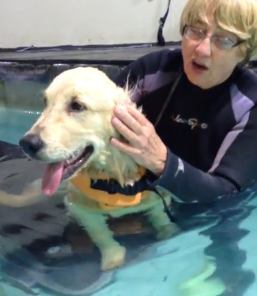
In this video, Julie, who helps dogs learn how to swim and get low-impact exercise, explains that dogs’ ears get really hot when they swim. When they work out too much, they get hot dog ears! Julie checks the inside of their ears after a few minutes of exercise. In this video, she’s working with Michael’s dog, Hudson: Watch the video here:


Julie says that even when dogs are exercising on land, their ears can get hot. It’s good if the dogs’ ears are warm because it means they’re working out. If dogs’ ears get too hot, they can get leg cramps, she says. By feeling the inside of dogs’ ears, you can also feel the dogs cool off. Julie provides a lot of fun dog facts for kids!


To learn more fun dogs facts for kids, follow Michael’s Dog Blog and subscribe to his youtube channel here: www.youtube.com/user/BashAndLucy. And be sure to check out Michael’s illustrated children’s book.  The book stars a sporty Golden Retriever named Lucy who has lots to teach a boys’ soccer team–if only Coach will let her!


2013年9月24日星期二

Should We Let Dogs Hang Their Heads Out Car Windows?


By Linda Cole


Why does your dog look at you like, “Is that really necessary” when you blow in his face, yet loves hanging his head out a car window going 60 MPH down the road? But just because dogs like hanging their heads out car windows doesn’t mean we should let them do it.


I had a dog, Kirby, who loved to ride in the car and I took him with me as often as I could. I wouldn’t let him hang his head out the window when we were going down the highway, but didn’t think he could get into trouble in town. My car had high seats in the front and I made him ride in the back seat with the back windows rolled up. So, I figured he was safe. As it turned out, I was wrong. One day as I went around a corner, Kirby was excited and leaned out my open window before I knew what he was doing. Thankfully, I was going slow and slammed on the brakes in time to avoid running over him. He was fine, but needless to say, I was shaken and from that moment on, I never roll car windows down all the way when I have a dog with me in the car.


Falling out of a moving vehicle isn’t the only danger for dogs who hang their heads out car windows. A dog’s eyes can become targets for bugs, small rocks, pieces of debris on the roadway and dust. Think about what a small rock can do to your windshield if it hits just right, even at a slow speed. How many little chips does your car grill have from all the tiny rocks that have hit it? Imagine what a rock could do to your dog’s eye, not to mention what the vet bill could do for your wallet. And if your dog has allergies, the dust and pollen rushing into his face isn’t going to help his condition.


Dogs who hang their heads out car windows are also at risk for ear infections from wind blown particles or just by the wind blowing their ears. As their ears flap in the wind, blood can pool in the soft tissue of their ear flaps. The constant flapping of the ears against their head can cause the ear flaps to swell which is painful. If a dog is allowed to hang his head out the car window a lot, scar tissue will form in the soft tissue of the ears. This can damage them permanently and give the dog lifelong ear problems.


Riding in a car for a dog is exciting, with all kinds of smells rushing through an open window. Think about it like this. Imagine all of the sights and smells you’re surrounded with at the county fair. Popcorn, hot dogs, cotton candy, burgers, people laughing and having a good time, eating and going on rides. A county fair is full of new experiences and smells that stimulate us from head to toe. That’s how a dog feels riding down the road in the car. Their senses are on overdrive as they sniff out and see all sorts of things that change as the car moves down the road. But as responsible pet owners, safety should come first, and letting dogs hang their heads out car windows isn’t a good idea.


That’s not saying your dog can’t enjoy their ride in a car. The window only needs to be cracked to allow all the wonderful smells to enter the car and surround your dog. There’s nothing wrong with open windows in the car, if your dog is buckled in like the rest of the family which will keep him from falling out the window and still allow him to sniff all the enticing smells. That way he has the best of both worlds without hanging his head out the car window, and you can concentrate on driving the car.


Letting a dog ride in the bed of a truck isn’t a good idea either. The dog risks injury from falling out of the truck, has increased risk from flying debris and can burn the soft tissue on their paws by standing on the hot metal of the truck bed. Dogs have no idea what a vehicle’s speed means and if they get the urge to jump, they will. If you want to take your dog with you in your truck, please read How to Transport Dogs Safely in Pickup Trucks.


Responsible parents don’t let their children do things that could put them in danger. As responsible pet owners, we shouldn’t put our dog’s safety and health in danger by letting them hang their heads out car windows.


Read more articles by Linda Cole


2013年9月23日星期一

How To Cure A Dog"s Ear Infection - EcoEars Review

It’s been a while since I’ve posted a product review.  If you have a dog with an ear infection, or ear mites. Then you are going to want to know about this product.


Meet our dog, Pebbles.  Poor Pebbles has had gunky itchy ears for longer than I care to admit.  She constantly scratches and licks her paws.  Sometimes, she’ll even shake her head crazily.  She’s miserable and I was at a loss of what I could do for her. 
I took her to the vet.  He gave me some drops and instructed me to put this antibiotic in her ear twice a day for 10 days.  I did my best, but not always making the full 10 days.  Her ear would get slightly better but soon would be just as bad as before. 
Vet’s are not cheap, and so I just kept putting in the drops.  Even though it really wasn’t working.  I didn’t want to go back to the expensive vet, and my small bottle of expensive antibiotic was running out soon. 


What to do?
Well, I went searching online and found a product called EcoEars, a natural remedy.


For Dogs With Itchy, Smelly & Gunky Ears.  This sounded like Pebbles problem.  Maybe it would work? 


I ordered the product which was very reasonable and so much cheaper than the vet.  I couldn’t wait to receive it in the mail.  I was feeling so bad for my dog.


The product arrived within days. I found Pebbles and doused her ear good.  I loved the big bottle of EcoEars.  It was easy to use with it’s simple spout.  If some of the stuff missed the ear, no problem.  There was plenty.  Pebbles hated it, of course.


Imagine my surprise the next day when I checked Pebbles ear.  The black gunky stuff was clearing up already.  I could see pink again.  She wasn’t scratching or shaking her head anymore.  I gave her another dose.
You are supposed to do this for 10 days in a row.  By the third day Pebbles ear was perfect.  She is so happy, more relaxed.  I’m just thrilled with this product.


If your dog has ear infections.  I can not recommend EcoEars enough.
It’s a great product, priced right, and it works.


Thank you EcoEars.


NATURAL, HERBAL, HOMEOPATHIC EAR INFECTION TREATMENTS, REMEDIES FOR DOGS AND CATS


Introduction


The most commonly administered treatment for ear infections is antibiotics. And while antibiotics can be very useful they are one of the most over-prescribed medications used today. When a dog / cat is frequently prescribed antibiotics – just like with humans, dogs / cats can become immune to the antibiotics. This can create a critical situation if a dog or cat requires antibiotics to save its life.


Antibiotics can also be counter-productive to solving the problem of ear infections. Antibiotics suppress the immune system. If an ear infection is a result of a yeast infection (Candida) or an otherwise suppressed immune system the administration of antibiotics can actually make the condition worse.


For these reasons it is important that antibiotics only be used when absolutely necessary.


Herb and fruit extracts offer a readily available, all-natural and affective alternative  to treating ear irritations and infections with antibiotics. While some herbs should never be taken internally when a dog or cat is on certain conventional medications, using herb as a topical application is safe.


Dogs with floppy ears may be particularly prone to ear infections as air circulation inside the ear is limited, fur on the inside surface of the ear can become overgrown and dirt and particulate can become trapped. It is important to check your dog’s and cat’s ears on a weekly basis to ensure ears are clean.


What Causes Ear Infections?


Well there are many conditions that can lead to ear infections; the following provides some examples…


One – Acute Ear Infections 

This type of infection may be caused by:


  1. Bacteria;

  2. A scratch or cut inside or near the ear canal.


Two – Chronic (ongoing) Ear Infections

This type of infection may be caused by:


  1. Allergies – caused by inappropriate food ingredients such as corn, soy and other grains,  chemical based preservatives and other artificial additives such as chemical-based food colouring, etc.

  2. Candida (yeast infection);

  3. Chronic Bacterial infection;

  4. Hormonal unbalance;

  5. Stress;

  6. Suppressed immune system.


Three – An Infestation of Ear Mites

Ear mites are tiny spider-like insects that like to infest the ears of dogs, cats, rabbits and other small animals. Although they prefer the ear canals they can also live elsewhere on the animal’s body. The mites thrive in the moist warmth of the ear canal. They burrow into the ear, casing irritation and inflammation – the animal’s body responds to the attack by producing excess ear-wax. The ear mites feed on epidermal debris and ear wax.


Four – Other Foreign Material

Such as…particulate blowing about in the wind can impact and lodge into the ear canal (i.e. dogs that stick their heads out of vehicles);

Running through or rolling-in certain grasses that have hard seed-bearing seed heads. These seed heads have sharp points and microscopic barbs that can become lodged in a dog’s ears as they run through, play or roll-about in the grass. These barbs can easily work there way into flesh – the barbs then prevent the seed head from working its way back out. Hard seed bearing grasses are often referred to as ‘Fox Tails’. The following are typical examples of ‘fox tail’ grasses:


Cheat grass’ (Bromus tectorum);


Foxtail also called wild barley, squirreltail barley,
skunktail (Hordeum murinum), 


Red Brome (Bromus madritensis);


Rip-gut grass’ (Bromus diandrus).


Symptoms of an Ear Infection


Typical symptoms of an ear infection include:


  • Build-up of ear wax; when you clean the wax it redevelops quickly, i.e. within the next day or two);

  • Ear sensitivity/pain – your dog may turn its head away if you try to touch its ears or may cry in pain at your touch;

  • Dizziness and/or vomiting;

  • Holding of the head to one side;

  • Scratching at the ear (repeatedly, excessively, persistently);

  • Shaking of the head (repeatedly);

  • Strong odour;

  • Swelling, redness;


Persistent scratching and/or head-shaking can also lead to Aural Hemotoma - the constant irritation can break blood vessels resulting in an accumulation of blood between the layers of skin. This condition creates a large blister-like pocket that must be drained safely by a veterinarian. The best procedure to treat this condition is surgery in which the skin is cut and the blister completely drained. Less intrusive procedures such as draining the blister with a needle or small tube are less desirable measures as the blister will usually refill with blood in a matter of hours or days.


An Aural Hemotoma


Natural Options to Clean Ears, Reduce Irritation and Treat Ear Infections


Please note -when administering any of the below treatments:


  • Make sure that the liquid solution being dropped into or applied to your dog’s / cat’s ear is at room temperature;


    •  If the liquid is too cold you can cause additional discomfort, if the liquid is to hot you can cause discomfort and damage;


      • If you need to warm the solution up to room temperature simply take the solution, place it in a vial, dropper, small glass or bowl (dropper with the open end up) and sit the vial, dropper, glass or bowl in a larger vessel (glass or bowl) that contains a little warm water -  this will warm the solution up quickly.


    • If you want to dry your dog’s / cat’s ear once the application of the treatment has been completed use a cotton ball to gently pat the ear dry;


  • Gently rub/massage the ear in a circular motion, then remove your hand and let your dog/cat shake its head. 


    • You can use a cotton ball to gently wipe any excess oil off the inside of the ear flap;

    • If you need to use a cotton swab to clean more precisely – never put the cotton swab past the portions of the ear that you can readily see…do not put the swab into the ear canal – you can very easily damage the ear drum either temporarily or permanently!


    • Do not use any of these treatments if your animal’s ear drums are perforated/punctured.


    The number of drops suggested for each flush is a typical dosage – however if your dog / cat is very small, i.e. 4 lbs, use less drops, if your dog is 150 – 200 lbs you will need to use more drops.


    Some of the following Ear Flush Recipes call for tinctures. Tinctures are  readily available at most health food stores and on-line. If you wish you can also make the tinctures yourself. 


    Organic Apple Cider Vinegar (ACV) & Distilled Water Ear Flush – to keep ears clean, treat ear infections and reduce irritation


    My personal favorite treatments – particularly for treating yeast infections (candida) of the ear is 1) Colloidal Sliver (see further below) or;
     2) ACV.  
    I use the ACV undiluted – but you can also dilute it with water as indicated below.


    Organic Apple Cider Vinegar (ACV) has anti-bacterial, anti-fungal and anti-viral properties (primarily from the acetic acid and malic acid in ACV).

    This herbal flush is good for treating ear infections. Use it once or twice daily if the dog has a dirty, irritated or infected ear.


    While you could choose to substitute the organic ACV for non-organic – I do not recommend going with non-organic, at least not in North America. Most of the non-organic ACV produced in North America is derived from apples imported from China, where the amount of toxic pesticides and herbicides used on apples is not only more voluminous than what is applied in NA, but also poorly if not completely unregulated in many regions.


    1. Combine equal parts of ACV and distilled water, mix the solution;

    2. With a syringe or dropper, gently drop about 10 drops of the liquid into your dog’s /cat’s ear – make sure that the syringe is located at the entrance to the ear canal – the syringe should never be placed inside of the ear canal.

    3. Gently rub/massage the ear in a circular motion, then remove your hand and let your dog/cat shake its head.


    If you would like to know more about the many beneficial uses of ACV for your dog you can read more here.


      Calendula Ear Flush – to keep ears clean and reduce irritation


      Use this flush once or twice daily. Calendula has anti-fungal properties. It is also very effective in promoting the healing of wounds. Cut this recipe in half for smaller animals.


      Combine the following in a glass:


      1. 1 cup warm distilled or filtered water;

      2. 1 teaspoon calendula tincture;

      3. 1/2 teaspoon sea salt;


      With a syringe or dropper, gently drop about 10 drops of the liquid into your dog’s /cat’s ear – make sure that the syringe is located at the entrance to the ear canal – the syringe should never be placed inside of the ear canal.


      Gently rub/massage the ear in a circular motion, then remove your hand and let your dog/cat shake its head.

      This ear flush may also be expanded to include a small amount of Meadow Anemone (Pulsatilla nigricans) tincture.


      Colloidal Silver Water and Gel – reduce inflammation, treat infection


      Silver is a natural and powerful broad spectrum antibiotic agent, it is also has excellent antiseptic, antifungal and disinfectant properties. Read this article to find out:


      • The history of Colloidal Silver; 

      • How Colloidal Silver:

      • Kills virus, fungus and bacterium;

      • Speeds healing;

      • How to apply it;

      • How to select a quality product..


      Garlic Oil Ear Flush – keep ears clean, treat ear infections, ear mites


      Garlic is a powerful, natural broad-spectrum antibiotic. The active antibiotic agent in garlic is allicin (a sulfur compound). Allicin is produced when garlic is chopped, chewed or bruised. Garlic is also an antioxidant, anti-allergen, and anti-carcinogen – garlic contains germanium, an anti-cancer agent.


      Garlic oil can be used to:


      • Keep ears clean;

      • Treat bacterial of fungal infections of the ear;

      • Treatment for ear mites;

      • Treat inner ear fluid and inner ear swelling;


      To prepare Garlic Oil you will need:


      • A small, clean wide-mouth glass jar;

      • Cheesecloth or other breathable clean cloth;

      • Elastic band or string;

      • Amber, brown or blue storage bottle;

      • Garlic cloves;

      •  Virgin, or extra virgin olive oil (cold-pressed olive oil).


      Preparation:


      • Remove the outer skin (also called ‘paper’) from the garlic cloves;

      • Cut the garlic cloves into thin slices;

      • Put the sliced garlic in the jar, leave a little space at the top of the jar empty;

      • Pour the olive oil into the jar, making sure to add enough oil to completely cover the garlic – make sure that you leave some empty space at the top of the jar;


        • Cover the top of the jar with a few layers of cheesecloth:

        • Stretch the cheesecloth so it lays flat on top of the lid – if the cloth touches the oil it will absorb the oil and make a mess;

        • Secure the cloth with string or an elastic band;


      • Let the garlic/oil filled jar sit top cure, in a warm location for 10 to 14 days;

      • Once the curing period is over, separate the garlic from the oil by straining the oil into an amber, brown or blue storage bottle;

      • Store the Garlic Oil in the refrigerator.


      Administering

      • For infection and mites: twice daily, until the infection/infestation is resolved;

      • For maintenance and cleaning: once a week to once a month as required to keep ears clean…


      Make sure the oil is warmed up to room temperature. With a syringe or dropper, gently drop several drops of the oil into your dog’s /cat’s ear – make sure that the syringe is located at the entrance to the ear canal – the syringe should never be placed inside of the ear canal.


      Gently rub/massage the ear in a circular motion, then remove your hand and let your dog/cat shake its head. You can use a cotton ball to gently swab any excess oil off the inside of the ear flap.


      Garlic & Mullein Ear Flush – to keep ears clean, reduce irritation and treat ear infections


      Mullein is anti-microbial and anti-viral properties. Garlic is a natural anti-biotic.This herbal flush is good for treating ear infections. Use it once or twice daily.


      Combine the following in a glass:


      1. Equal parts of mullein oil and garlic oil;

      2. Combine the two oils;

      3. Add 10 to 20 drops of olive oil or vitamin E for every one ounce of garlic/mullein oil mixture.


      With a syringe or dropper, gently drop about 10 drops of the liquid into your dog’s /cat’s ear – make sure that the syringe is located at the entrance to the ear canal – the syringe should never be placed inside of the ear canal.


      Gently rub/massage the ear in a circular motion, then remove your hand and let your dog/cat shake its head.


      Green Tea Flush – to reduce irritation and keep ears clean


      Add two tea bags (or two teaspoons of green tea) to 8 ounces of boiling water. Allow the tea to steep and cool. Apply ½ of a dropper (about 10 drops) twice daily to irritated ear. Make sure that the dropper or syringe is located at the entrance to the ear canal – the syringe should never be placed inside of the ear canal.  Gently rub/massage the ear in a circular motion, then remove your hand and let your dog/cat shake its head.


      Oregon Grape Ear Flush – to keep ears clean, reduce irritation, treat ear infections and /or kill ear mites


      Oregon Grape has strong antibiotic, antibacterial, anti-inflammatory and astringent properties. Apply 1 to 10 drops (depending on the size of your dog/cat) of Oregon Grape tincture to the ear twice daily until the infection is eradicated.


      Yellow Dock Tea Flush- to reduce irritation and keep ears clean


      Add one tablespoon of dry yellow dock to ½ cup boiling water. Allow the tea to steep and cool. Once the tea is cool, strain it so that the fluid is clear and free of particulate. Apply ½ of a dropper (about 10 drops) twice daily to irritated ear. Make sure that the dropper or syringe is located at the entrance to the ear canal – the syringe should never be placed inside of the ear canal.  Gently rub/massage the ear in a circular motion, then remove your hand and let your dog/cat shake its head.


      Eradicating Ear Mites


      Garlic Oil Ear Flush – keep ears clean, treat ear infections, ear mites


      Garlic is a powerful, natural broad-spectrum antibiotic. The active antibiotic agent in garlic is allicin (a sulfur compound). Allicin is produced when garlic is chopped, chewed or bruised. Garlic is also an antioxidant, anti-allergen, and anti-carcinogen – garlic contains germanium, an anti-cancer agent. See recipe and instructions above.


      Yellow Dock Ear Flush


      Yellow dock has many medicinal properties. It astringent, anti-inflammatory, and purification properties kill the ear mites while soothing inflammation and itchiness. If your dog/cat is prone to ear mites you can use this recipe to shampoo your pet’s head, ears and tail once a week.


      Combine…

      3 drops of yellow dock tincture;

      1 tbs of distilled water.


      Apply ½ of a dropper (about 10 drops) once daily to irritated ear. Make sure that the dropper or syringe is located at the entrance to the ear canal – the syringe should never be placed inside of the ear canal.  Gently rub/massage the ear in a circular motion, then remove your hand and let your dog/cat shake its head. Repeat the treatment once every three days for up to three weeks.


      Options for Pro-Active Maintenance / Prevention


      If your dog is prone to ear infections – you can also add an herb to your dog’s daily diet to help avoid infections and flush your dog’s ears occasionally.


      Ear Flushes


      Lemon Flush for Dogs Who Swim Frequently/Daily


      You can use this flush once a week during swimming season or more often if your pet swims on a daily basis


      Combine…

      The fresh squeezed juice of ½ a lemon;

      1 cup of warm distilled water;


      Strain the resulting liquid to remove lemon pulp and seeds. Apply ½ of a dropper (about 10 drops) once daily to irritated ear. Make sure that the dropper or syringe is located at the entrance to the ear canal – the syringe should never be placed inside of the ear canal.  Gently rub/massage the ear in a circular motion, then remove your hand and let your dog/cat shake its head.

      Lemon offers many other health benefits and uses – you can read more here.


      Apple Cider Vinegar and Water Flush


      The ACV/Water flush recipe provided above can be used once or twice a month to keep your dog’s ears clean and free of bugs.


      Adding Oils and Herbs to Your dog’s Diet


      Coconut Oil


      Coconut Oil is an anti-bacterial, anti-fungal, anti-viral. It also boosts the immune system and provides many additional health benefits. If you would like to learn more about the benefits of giving your dog or cat coconut oil and the recommended dosages you can read this article.


      Echinacea (Purple Cone Flower)


      Dogs that have frequent ear infections can benefit from taking Echinacea which has anti-biotic, anti-viral and immune system stimulating properties. Dry herb of Echinacea is available in health food stores


      Mullein Weed


      Dogs that have frequent ear infections can benefit from taking Mullein Weed which has anti-microbial and anti-viral properties. Dry herb of mullein is available in health food stores.


      Dosages for Adding Herbs to Your Dog’s Diet


      The table below provides a general guideline for herbs/spices based on your dog’s weight. The information provided in the table is an extract from Dr. Kidd’s Guide to Herbal Dogs Care.


      Daily Amounts Based on Dog’s Weight.


      Dog’s Weight


      Sprinkles
      (on dog’s food once/day)


      Teas


      Capsules/Tablets


      Tinctures


      1-10 lbs


      a small pinch


      less than 1/4 cup, 1-3 times/day


      1/2 capsule, 1-3 times/day


      1-3 drops, 2-3 times/day


      10-20 lbs


      a bigger pinch about


      1/4 cup, 1-3 times/day


      1/2-1 capsule/tablet, 1-3 times/day


      3-5 drops, 2-3 times/day


      20-50 lbs


      2 pinches-1 teaspoon


      1/4-1/2 cup, 1-3 times/day


      1-2 capsules/tablets, 2-3 times/day


      5-10 drops, 2-3 times/day


      50-100 lbs 10-


      2 pinches-2 teaspoons


      1/2-1 cup, 1-3 times/day


      1-2 capsules/tablets, 3-4 times/day


      20 drops, 2-3 times/day


      Over 100 lbs,


      up to 1 tablespoon


      up to 1 cup 3 times/day


      adult human dose


      adult human dose


      Please note certain herbs and spices do not create a hazard by themselves however they can interfere with conventional Western medicines. If you are using one of the topical flushes provided above to clean your dog’s/cat’s ear you do not need to be concerned about conflict. But if your dog is on any of the conventional medicines please make sure you consult your veterinarian before you introduce herbs to your dog’s diet. 


      Anti-inflammatory (i.e. Rimadyl)

      Aspirin

      Antibiotics

      Cardiac drugs

      Central Nervous System drugs

      Chemotherapy drugs

      Diabetic / Hypoglycemic drugs (i.e. Insulin)

      Diuretics (i.e. Furosemide, Diazide)

      Hormones (i.e. Thyroxine)

      Steroids


      ❀ᵔᴥᵔ❀

      Related Articles

      For related and additional articles on dog and cat, care, health, training, nutrition and animal advocacy go to thispage.


      Feel free to leave a comment below – if your comment is polite, informative etc. I will publish it. If your comment is a quick question, I will answer it if time permits…


      If you require additional assistancewith your dogs you can engage me to…

      1.0) Do an in-person session(see details below)

      2.0)  Do a phone/email consultation (see details below)


      1.0) In-Person Sessions are available to you if you live in the region of Ottawa-Gatineau, the Ottawa Valley and Region.

      (i.e. Ottawa, Hull, Alymer, Orleans, Bells Corners, Manotick, Vars, Kanata, Stittsville, Smith Falls, Fitzroy, Carp, Arnprior, Renfrew, etc.) 

        and surrounding areas 

      (i.e. Brockville, Smith Falls, Perth, Kingston, L’Original, Val-des-Monte, St-Pierre-de-Wakefield, etc.)

      or if you will be visiting the area from out-of-town.


      Methods of Payment (for In-Person Sessions):

      Cash, Email Money Transfer and Credit Card via PayPal


      2.0) If you reside elsewhere you can engage my world wide consultation service, details of which are provided just below…


      My Hourly Fee

      $ 100.00/hour in Canadian funds.


      Purchasing Consultation Time:

      Client’s often start out by purchasing an hour of my time and then augment that if required to suit the situation;

      Or you can – if your situation requires it, purchase whatever block of time you want (i.e. multiple hours).


      Methods of Payment:

      Email Money Transfer and Credit Card via PayPal


      1.0 Email Money Transfer:

      1 hour = $ 100.00 in Canadian Funds;

      For payment via email money transfer I provide you with a password (security information).


      2.0 Credit Card via PayPal

      1 hour = $ 100.00 + $ 5.00 PayPal Transaction fee = $ 105.00 Canadian Funds;

      For payment via PayPal I send you a PayPal invoice to enable payment.


      Method of Consultation – Canada, USA and Abroad (i.e. UK, Asia, etc.)


      If You Are Located In:


      1.0 Canada:

      I can work with you via:

      Phone with follow-up by email, or;

      Via email only;

      The choice is yours;

      If you want to work via phone you provide me with your phone number and I will call you at the mutually agreed upon Consultation time.


      2.0 USA:

      I can work with you via:

      Phone with follow-up by email, or;

      Via email only;

      The choice is yours;

      If you want to work via phone:

      You call me at the following number 613-622-7958, at the mutually agreed upon consultation time.


      3.0 ALL OTHER GLOBAL LOCATIONS (i.e. UK. Asia, etc.):

      I can work with you via:

      Via email only, or;

      Phone with follow-up by email…

      The choice is yours;

      If you want to work via phone:

      You call me at the following number 613-622-7958, at the mutually agreed upon consultation time.


      To Set-up a Consultation

      Step 1 – Identify how you would prefer to pay for the consultation;

        Payment options as noted above are:

      o    email money transfer, or;

      o    Credit card via Paypal.

      Step 2 – Identification of a consultation time that works for both our schedules;

      Step 3 – You then pay the fee for the amount of consultation time you want to purchase;

      Step 4 – Consultation takes place on the agreed upon time.


      Contact me at


      Office 613-622-7958
      Cell 613-293-3707


      Ottawa Valley Dog Whisperer Services

      Training;

      Behaviour Modification;

      Rehabilitation;

      Nutrition;

      Health


      Whether you are experiencing dog behavior problems and would like assistance, or just want to bring your dog up to be a well-balanced canine -  I offer both a local and international service for people with one or multiple dogs. 

      I work with all breeds – from small (i.e. Yorkie, Pomeranian, Chihuahua, etc.), medium breeds size (including Pit Bulls) and large breed dogs…


      International e-Consultation 


      Contact me at


      Office 613-622-7958
      Cell 613-293-3707


      ur Modification, Rehabilitation – Ottawa, Ottawa Area, Outaouais, Ottawa Valley


      International e-Consultation 


      Contact me at

       email ottawavalleydogwhisperer@gmail.com

      Office 613-622-7958
      Cell 613-293-3707